Automated Service through Artificial Intelligence and Hyper-Realistic Avatars
Empathy, Natural Language, and Human–AI Communication
Abstract
The development of conversational artificial intelligence systems has transformed how organizations provide automated services to users. The integration of natural language models, speech synthesis, and hyper-realistic avatars has enabled the creation of digital agents capable of interacting with humans in a more natural and empathetic way. This article analyzes the impact of hyper-realistic avatars on human–machine communication, the role of natural language in interaction, and the scientific evidence supporting their effectiveness in improving perceived empathy, social presence, and user satisfaction.
1. Introduction
The automation of user support through artificial intelligence has expanded across sectors such as digital healthcare, education, e-commerce, and government services. Early conversational systems were limited to text-based interactions; however, recent technological advances have enabled the integration of visual representations of digital agents, commonly known as virtual avatars.
Several studies in human–computer interaction indicate that humans tend to respond socially to digital systems when they exhibit human-like characteristics such as natural voice, facial representation, or gestures. This phenomenon has motivated the development of conversational agents represented by hyper-realistic avatars, capable of transmitting social signals similar to those present in human interactions.
2. Evolution of Conversational Agents
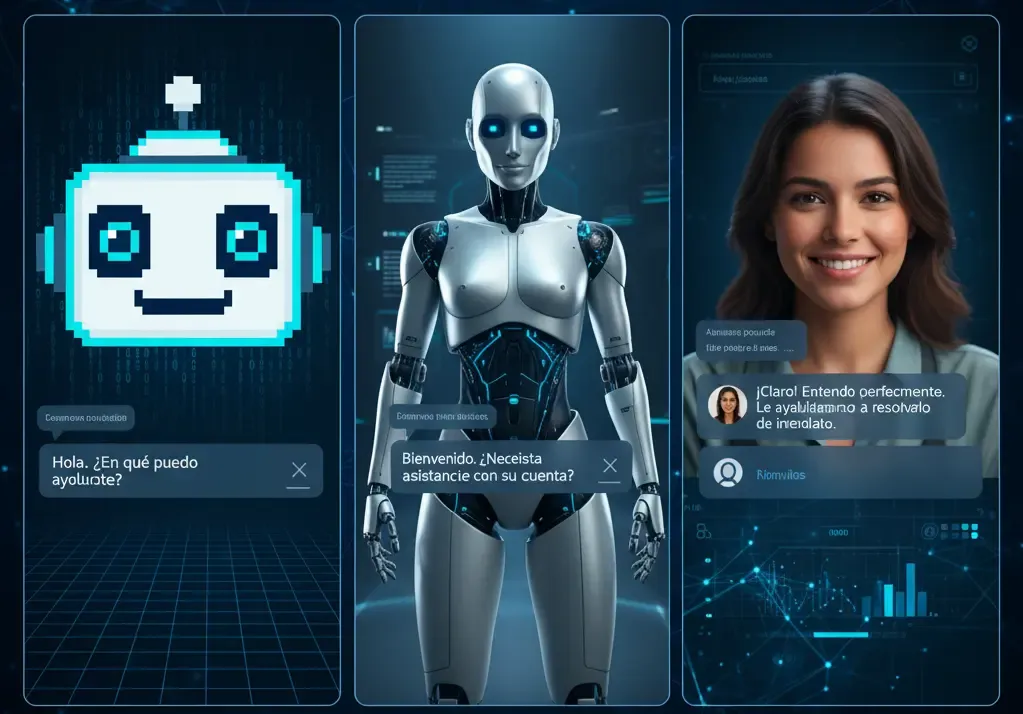
Source: Social robot Furhat used in human–machine interaction research.
Modern conversational agents integrate multiple technologies:
- Natural Language Processing (NLP)
- Speech synthesis
- Emotion recognition
- Animated digital avatars
An example of these technologies is Furhat, a social robot designed for conversational interaction using projected facial expressions and speech recognition. The system is capable of communicating in multiple languages and detecting social cues during interaction.
These systems attempt to replicate fundamental elements of human communication, including eye contact, gestures, and emotional expressions, with the goal of improving the interaction between humans and automated systems.
3. Hyper-Realistic Avatars and Social Presence
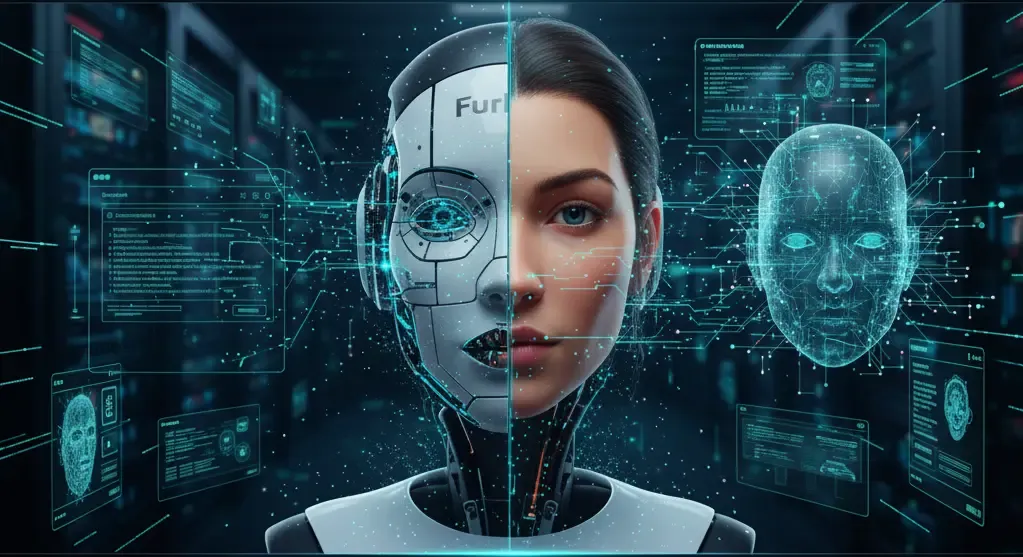
Example of a hyper-realistic digital avatar used in virtual simulations and environments.
Scientific literature suggests that the level of realism in avatars directly influences the perceived quality of communication.
A study published in Computers in Human Behavior found that visual and behavioral realism in avatars increases psychological co-presence and satisfaction in user communication.
Similarly, recent research indicates that avatar realism improves the perception of social presence, trust, and attractiveness of the digital agent, which are critical factors in virtual interaction environments.
Other studies on avatar-mediated experiences in virtual environments demonstrate that increased realism reduces the psychological distance between the user and the avatar, strengthening the user–avatar relationship and increasing the intention to continue using the system.
4. Empathy in Conversational Agents
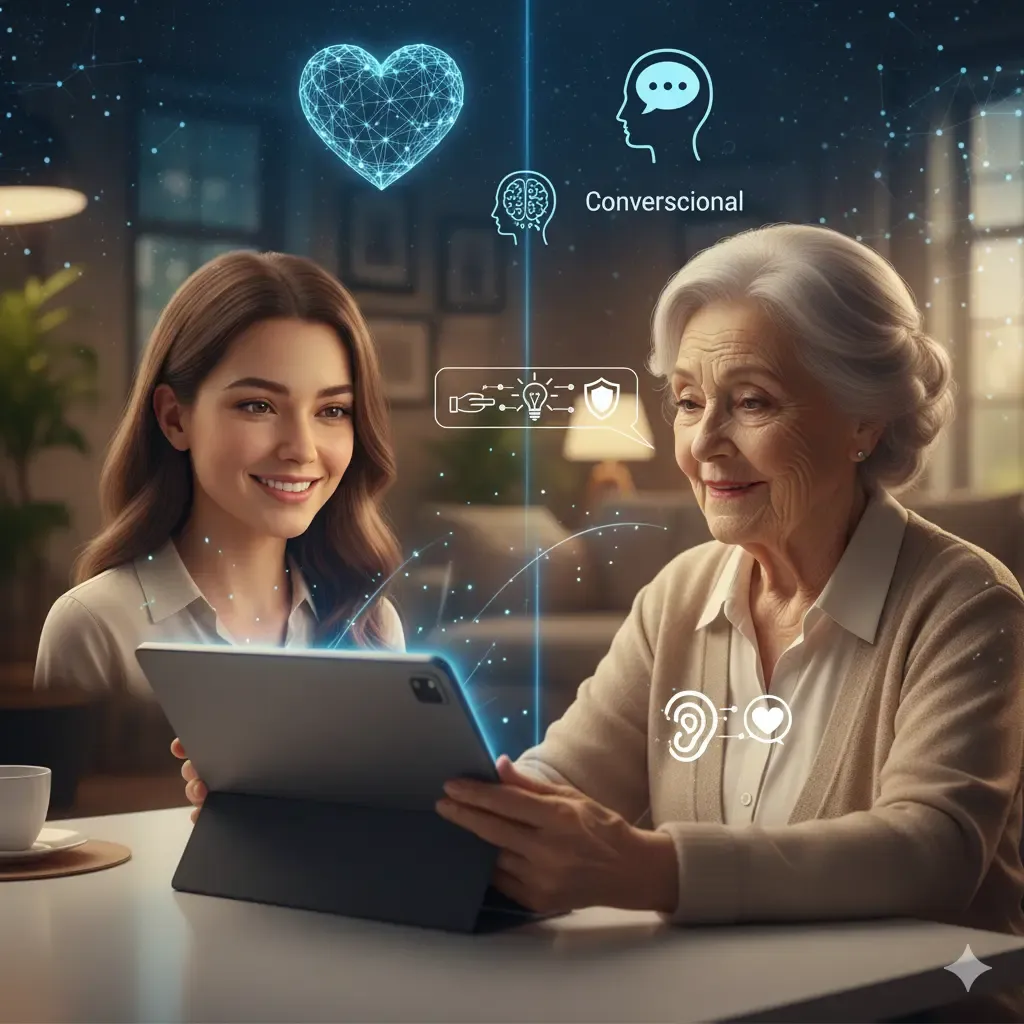
Example of a virtual avatar used in social interaction research.
Empathy is a fundamental element of human interaction and also plays a crucial role in communication with artificial agents.
Recent research shows that users perceive greater empathy when digital agents combine natural language with non-verbal signals, such as facial expressions or gestures. These signals help convey emotions and improve the understanding of conversational context.
Studies on interaction with photorealistic avatars demonstrate that the representation of facial expressions and body gestures increases the social connection between the user and the digital agent, facilitating more natural communication.
Additionally, the so-called Proteus Effect suggests that the characteristics of avatars can influence users’ behavior and perception during digital interaction.
5. Natural Language and Multimodal Communication

Conceptual example of interaction with intelligent assistants.
The development of advanced natural language processing models has enabled AI systems to understand and generate human language with high levels of accuracy.
The integration of written language, voice communication, and visual signals constitutes what is known as multimodal interaction. This approach allows systems to interpret multiple communicative signals simultaneously, significantly improving the quality of human–machine interaction.
Research on conversational avatars shows that combining voice, text, and facial expressions allows the creation of communication experiences that feel more natural and satisfying for users.
6. Applications in Automated Service
Applications of conversational agents with hyper-realistic avatars include:
Digital Healthcare
- Virtual assistants for medical guidance
- Patient monitoring systems
- Digital psychological support
Customer Service
- Virtual agents for automated support
- Assistants in e-commerce platforms
Education
- Virtual tutors
- Interactive educational simulations
These technologies enable organizations to provide continuous service at scale while maintaining a communication experience closer to human interaction.
7. Ethical and Technological Challenges
Despite their potential, the adoption of hyper-realistic avatars presents several challenges:
- privacy and data protection
- manipulation through deepfakes
- the uncanny valley phenomenon
- transparency in AI systems
Current research suggests that responsible design of these systems must prioritize AI ethics, transparency, and user-centered design principles.
8. Conclusion
The convergence of artificial intelligence, natural language processing, and digital representation technologies has enabled the development of more advanced and socially intelligent automated service systems.
Hyper-realistic avatars, by providing visual and emotional signals similar to those found in human interaction, can significantly improve perceptions of empathy, social presence, and trust in automated systems.
As these technologies continue to evolve, conversational agents with visual representation are likely to become a central component of digital communication across multiple sectors, particularly in automated service environments.
References
- Kang, S., & Watt, J. (2013). The impact of avatar realism and anonymity on effective communication via mobile devices. Computers in Human Behavior. https://doi.org/10.1016/j.chb.2012.10.010
- Tao, Z., Liu, Y., & Qiu, J. (2025). Impact of virtual avatar appearance realism on perceptual interaction experience. Frontiers in Psychology.
- Cao, Q. et al. (2023). Is High-Fidelity Important for Human-like Virtual Avatars in Human Computer Interactions? International Journal of Network Dynamics and Intelligence.
- Liu, S. et al. (2025). Investigating Human Digital Doubles. arXiv.
- Gallego Vila, J. (2025). Embodied Presence: Realistic Avatars and Trust Verification in Metaverse Environments. IntechOpen.
- Yee, N., & Bailenson, J. (2007). The Proteus Effect: The Effect of Transformed Self-Representation on Behavior. Human Communication Research.